Tag Tree
Every Steam tag sorted into ten groups, from general to specific, with the number of games carrying it. Use it to place your game among Steam’s tags and to open any niche or list of games from there.
Open Tag Tree →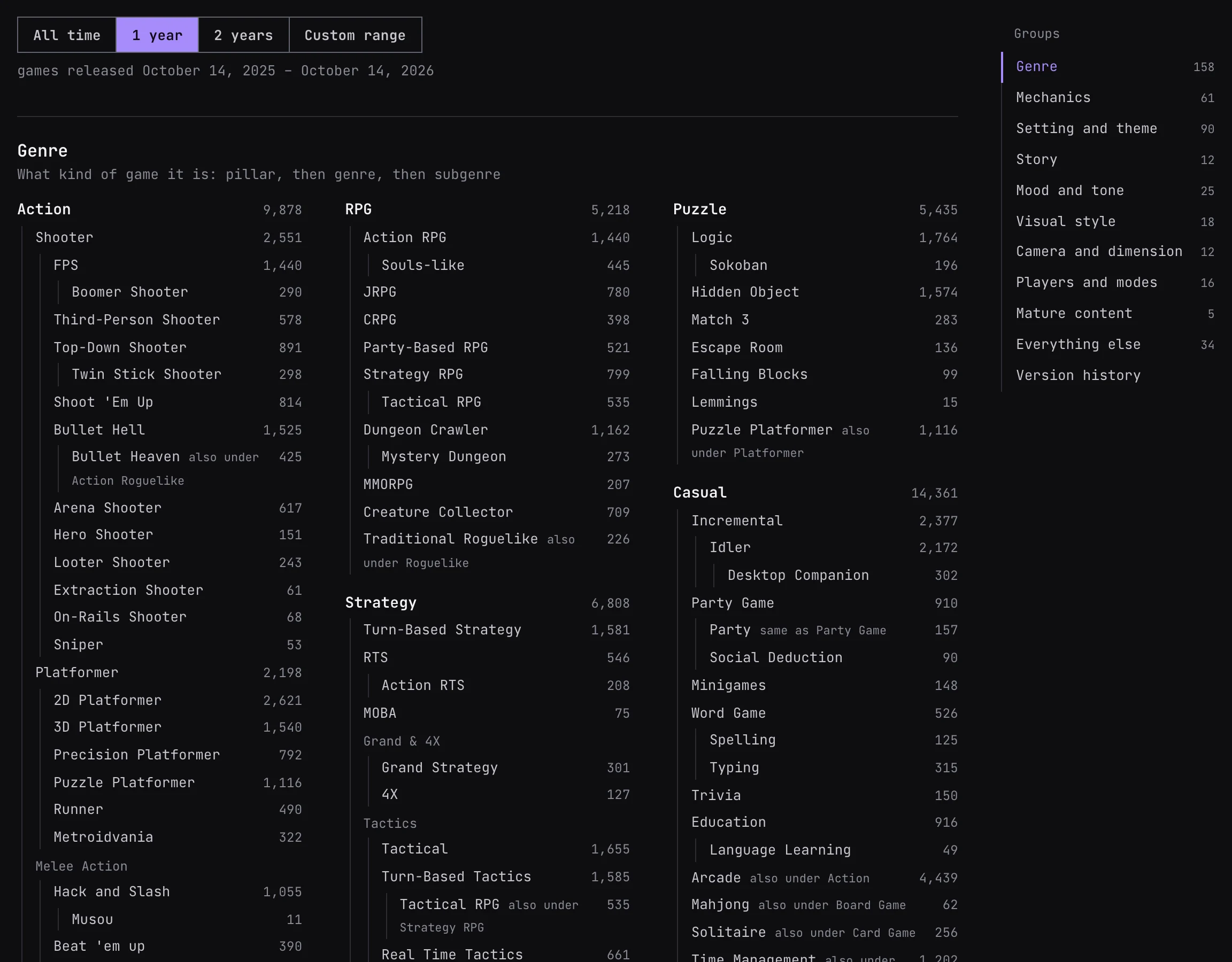
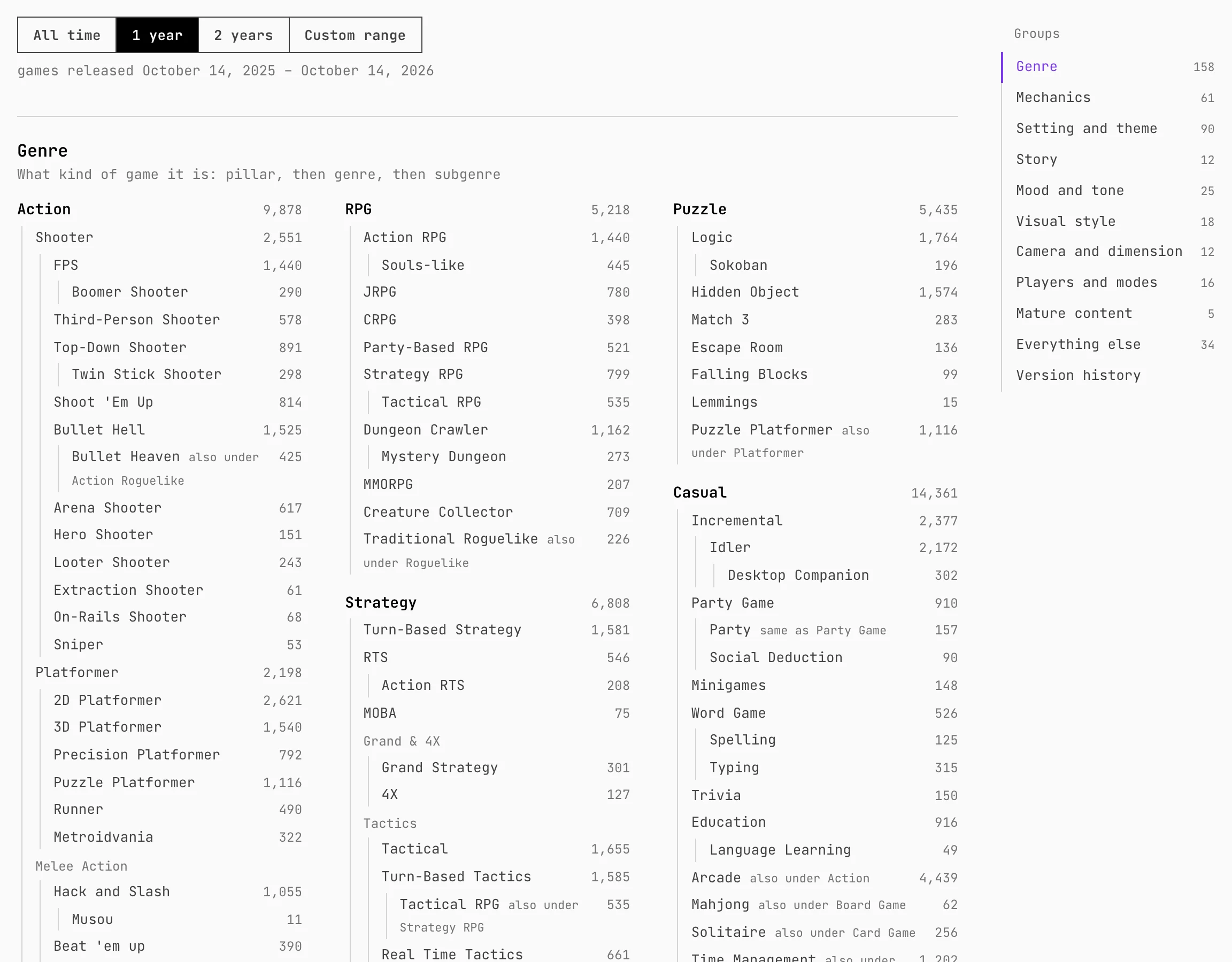
- Groups. Genre, mechanics, setting and theme, story, mood and tone, visual style, camera and dimension, players and modes, mature content and everything else. Inside a group, tags run from general to specific; grey labels are our groupings, not Steam tags. “Also under” marks a tag that belongs under two parents, “same as” a duplicate.
- Period. All time counts every game on Steam with the tag, announced ones included. 1 year, 2 years or a custom range count only the games actually released in it.
- Numbers. A count is for that exact tag: games that carry only a narrower tag under it are not included. Click a number to open those games in Explore, a tag name to open its niche page.
- Version. The tree has a version and a date at the top; the history at the bottom lists the tags added, removed and moved in each version. Tag names are Steam’s own and stay in English.
Niche pages
Each tag opens a page about its niche: how many games ship with it, what they end up with, failures included, and which pairings with other tags work.
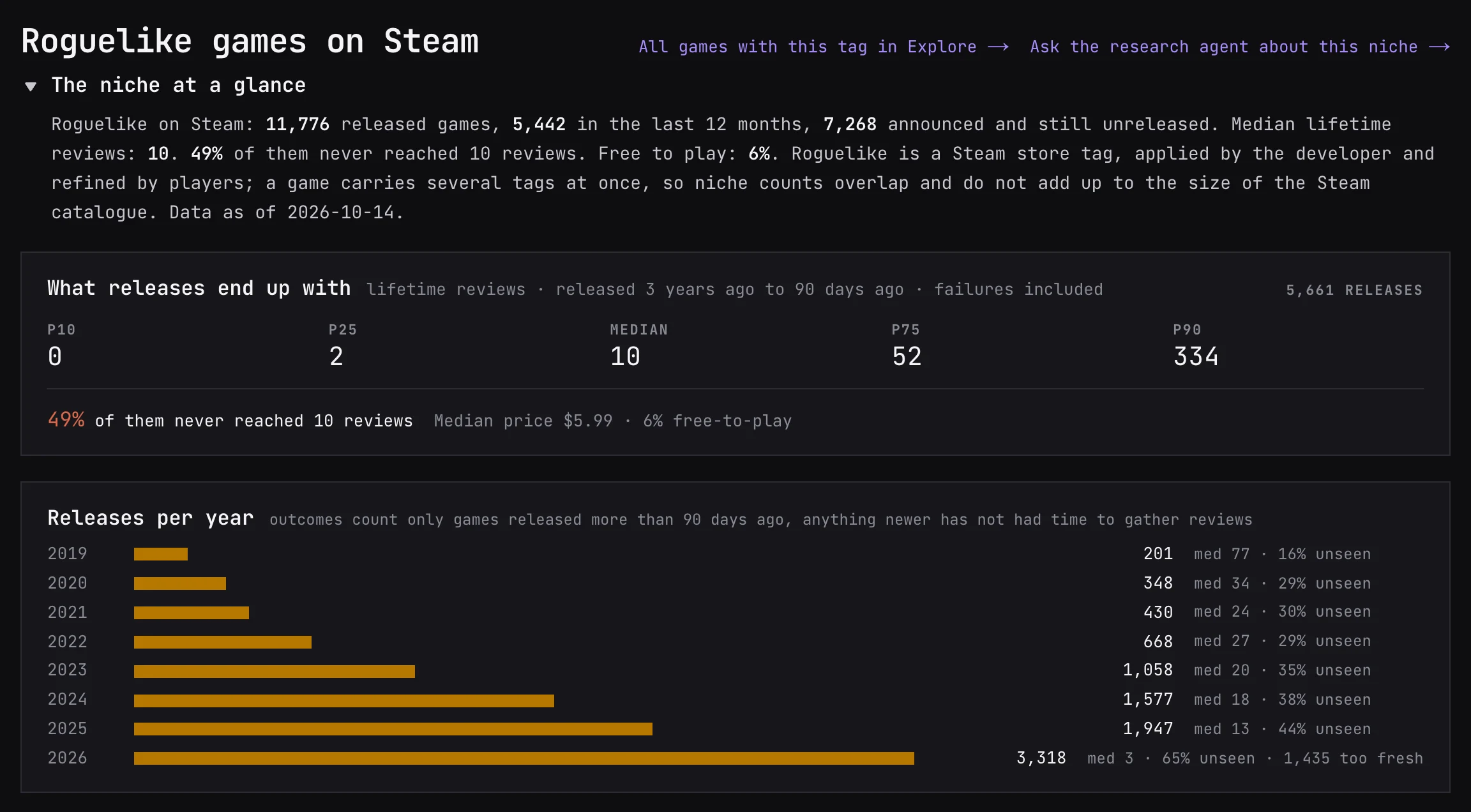
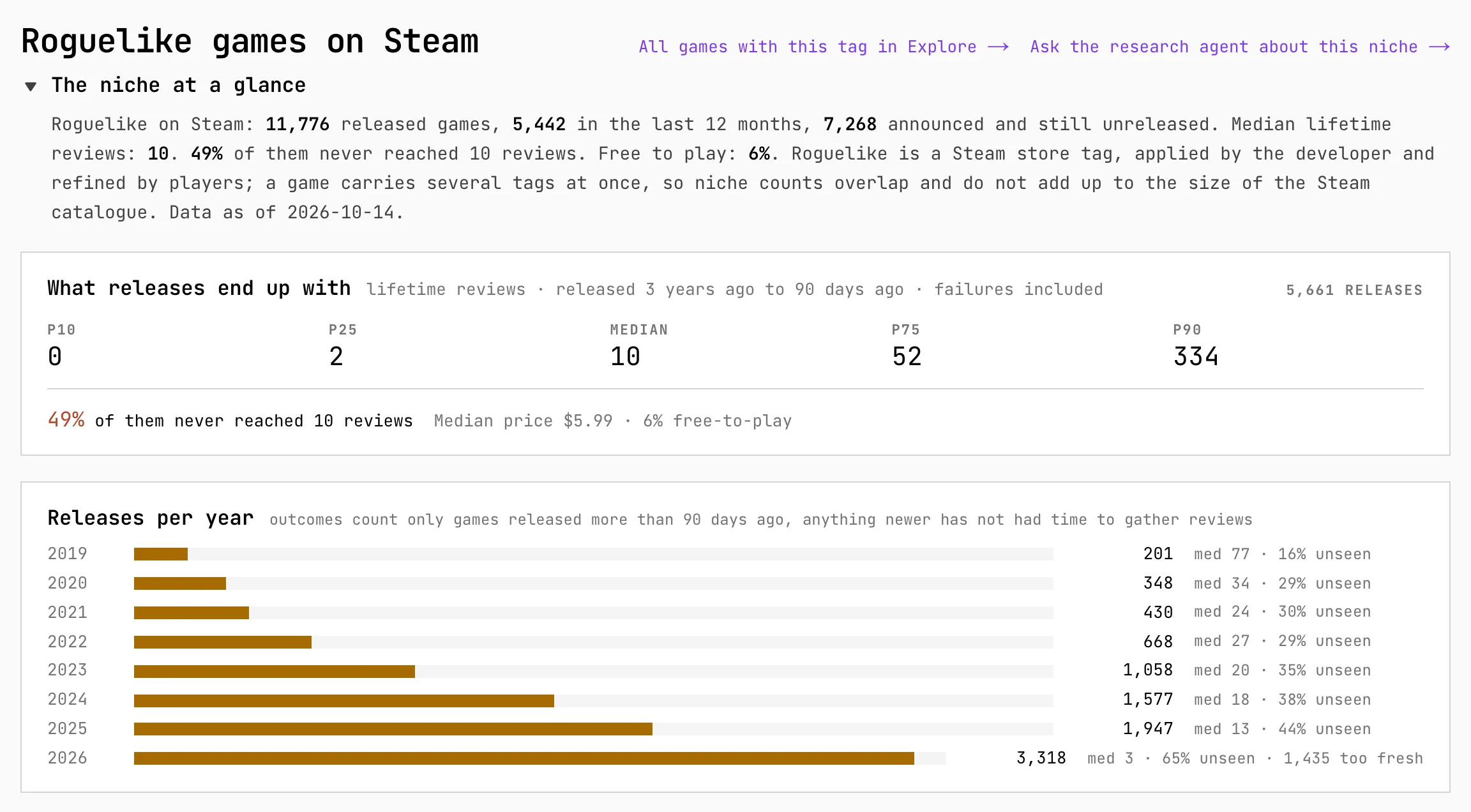
- At a glance — releases in total and over the last 12 months, how many are announced, median lifetime reviews, the share that never reached 10 reviews and the share of free-to-play.
- What releases end up with — lifetime reviews of the games released between three years and 90 days ago, from the bottom 10% to the top 10%, failures included, with the median price.
- Releases per year — the last eight years, each opening that year’s games in Explore; games younger than 90 days are counted but not judged.
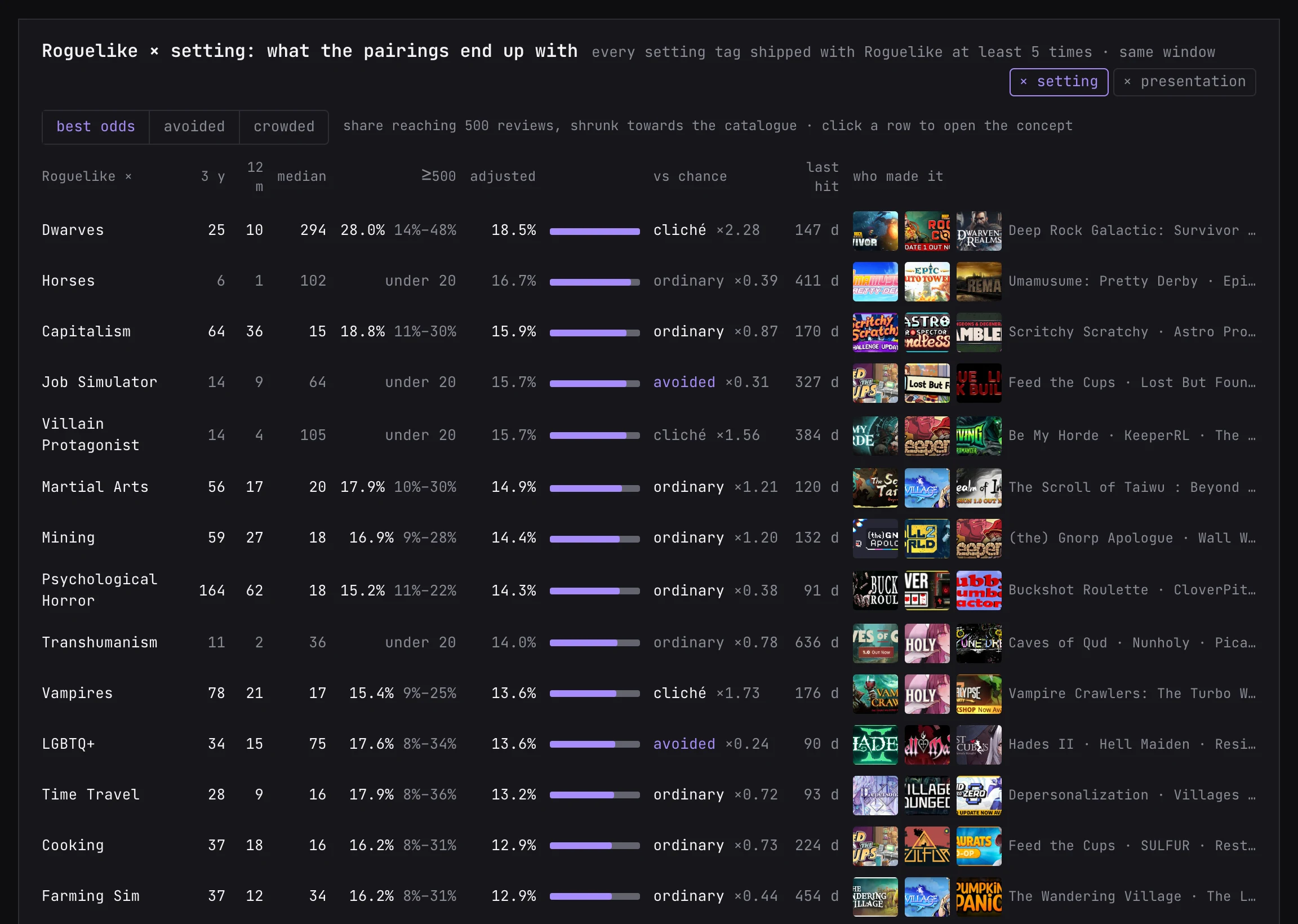
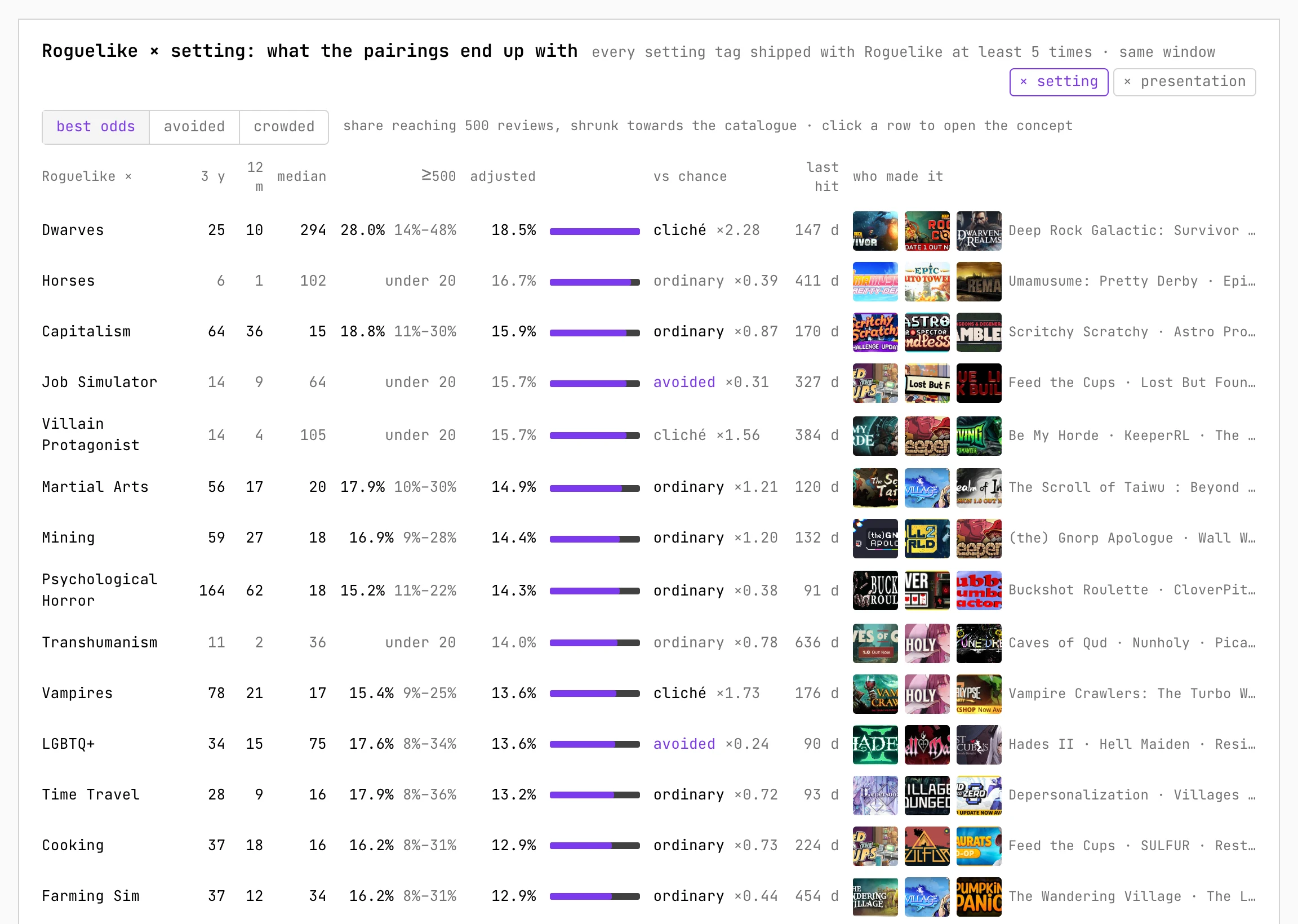
- Pairings — every mechanic, setting or presentation tag shipped with this one at least five times: how many releases, the median, the share that reached 500 reviews, an adjusted share that pulls small groups towards the store average so a lucky handful does not top the list, and whether the market seeks the pairing out or avoids it.
- Best known, latest, usually shipped alongside — the top games by reviews, the newest releases and the tags this niche most often comes with.