Game page
One page per Steam game: how big it got, how it compares with games like it, how it got there and what surrounds it. Open any game from the search in the header or from any tool.
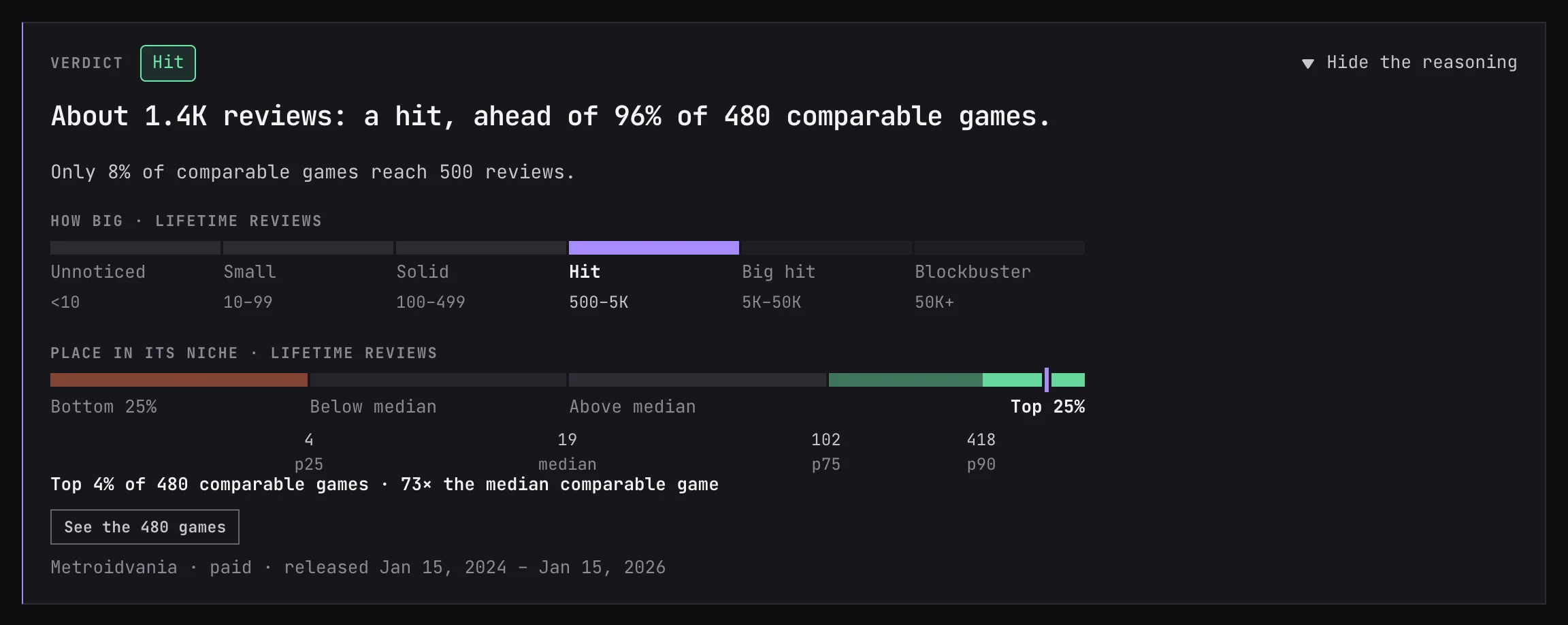
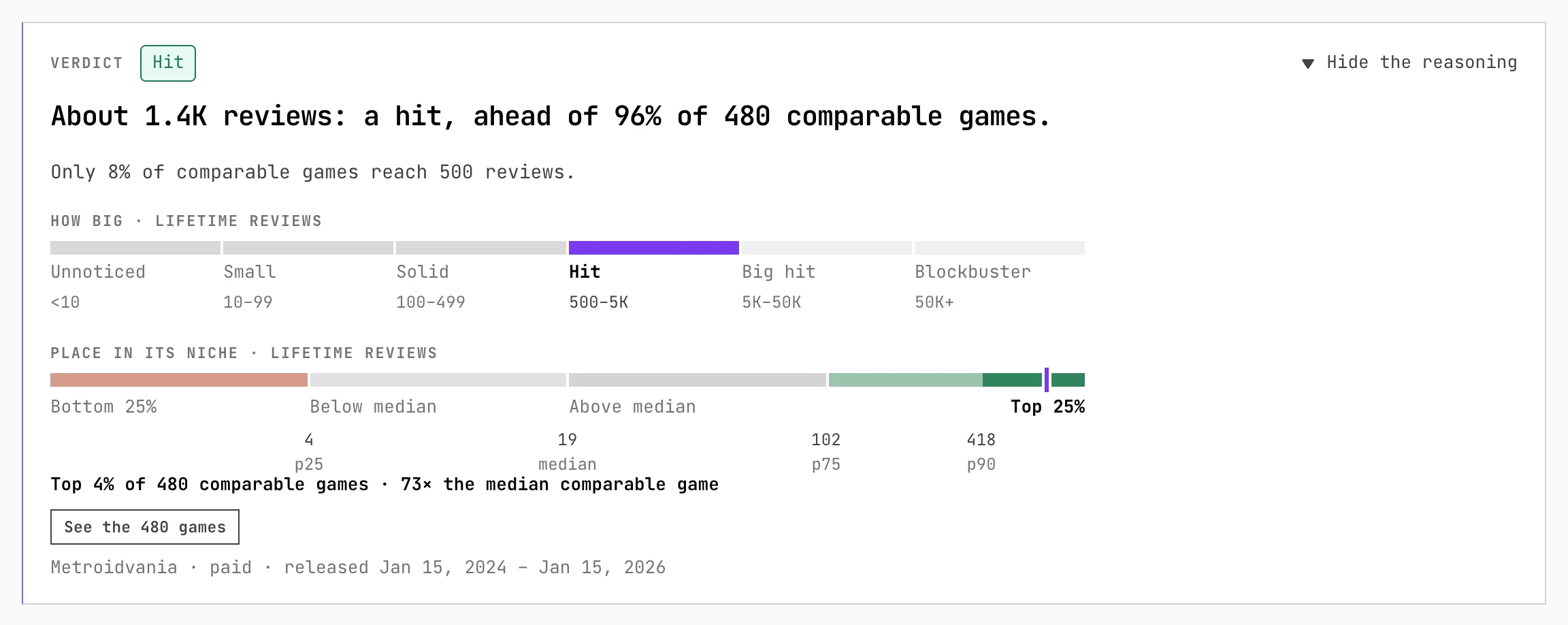
- How big — lifetime reviews on six steps: Unnoticed (under 10), Small (10–99), Solid (100–499), Hit (500–5K), Big hit (5K–50K), Blockbuster (50K+). The steps are the same for every game, so 500 reviews and half a million no longer share a label.
- Place in its niche — the share of comparable games it is ahead of, in quarters: bottom 25%, below median, above median, top 25%, with the top 10% marked. Under the marks are the reviews of the games at the 25th, 50th, 75th and 90th percentile, and the line below says how many times the median game’s reviews it has. In a quiet niche the top quarter can start below 20 reviews, and the numbers make that visible.
- In its first 90 days a game is measured by pace instead: its reviews over its first days against comparable games over the same number of days after their own release. Its size is shown as it stands so far: its step is filled up to where the game is on it, and the rest of the step is striped and moving while reviews keep coming in.
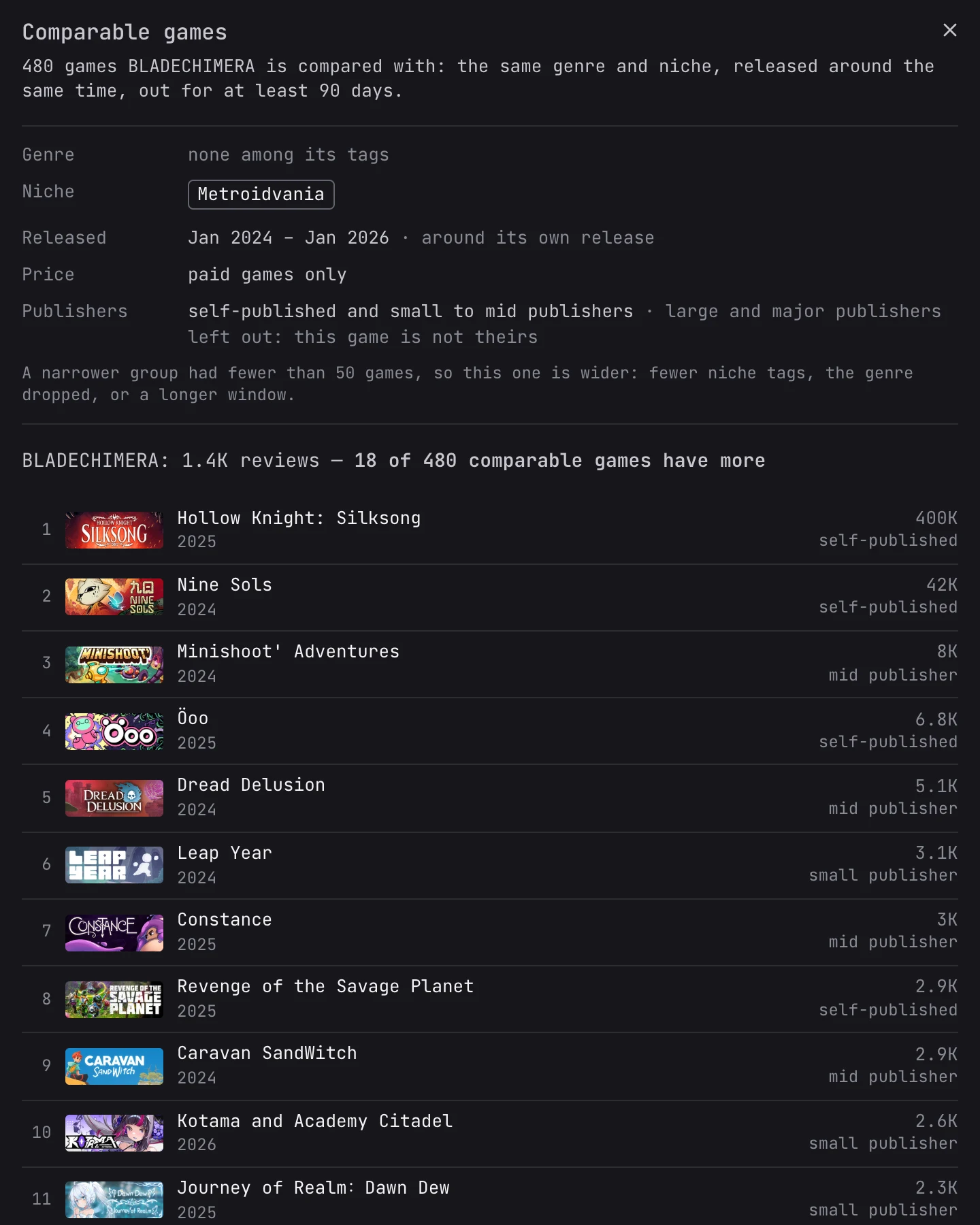
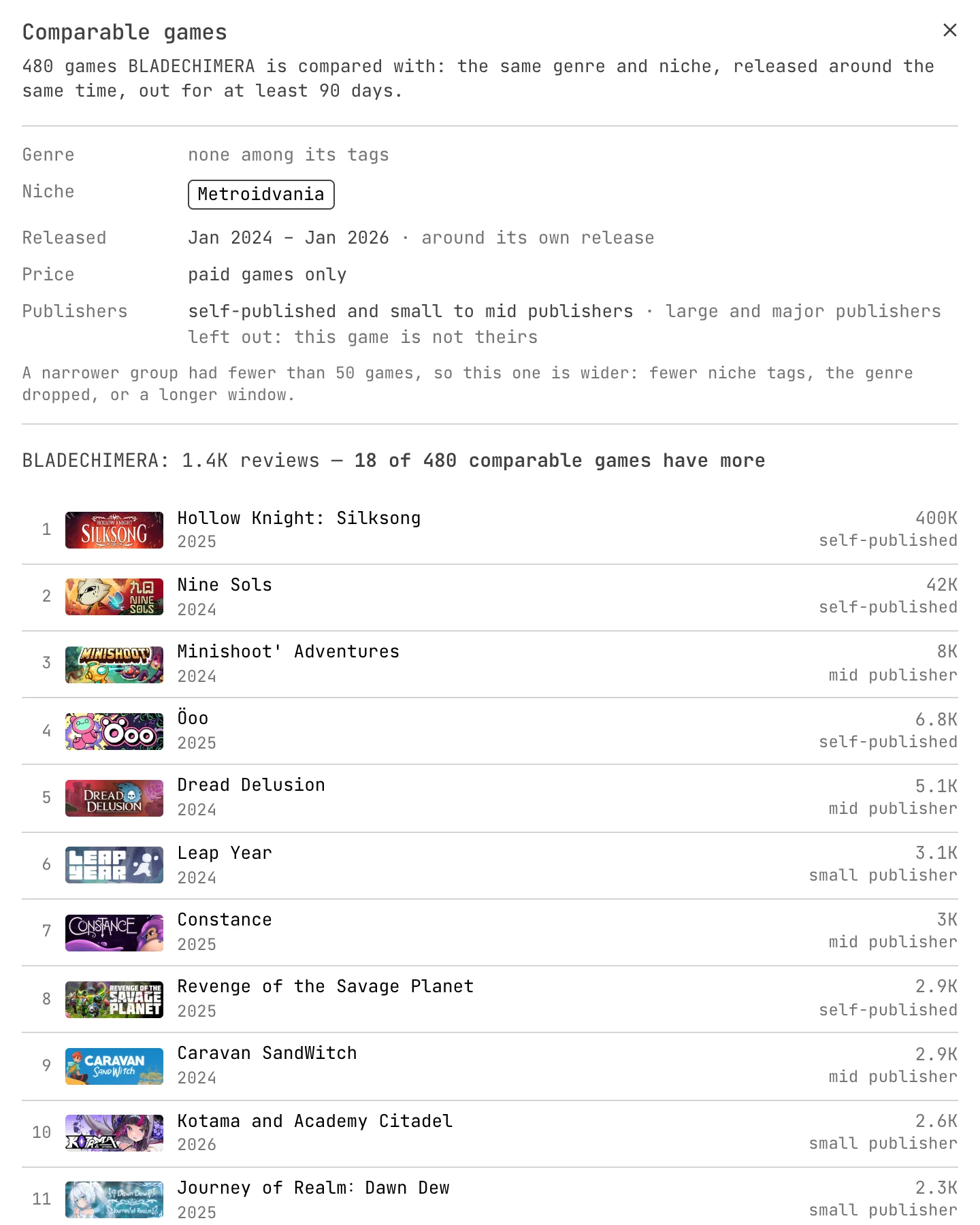
- Comparable games share the base genre (Action, Strategy, Simulation…) and the niche: the game’s first specific tags, skipping service tags like Indie or Singleplayer and tags found on more than 15% of releases; co-op and PvP count as a niche. They came out within a year of the game, have the same price model, free or paid, and have been on sale for at least 90 days. For an independent game, titles from large publishers are left out. When fewer than 50 games qualify, the group widens step by step: fewer niche tags, no genre, a longer window.
the rest of the page
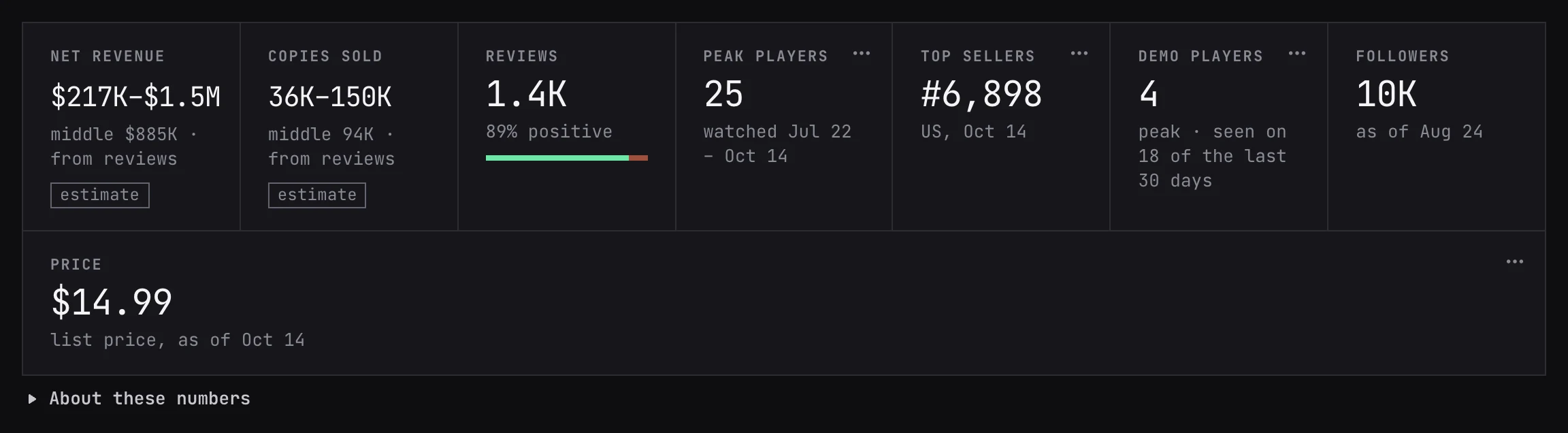
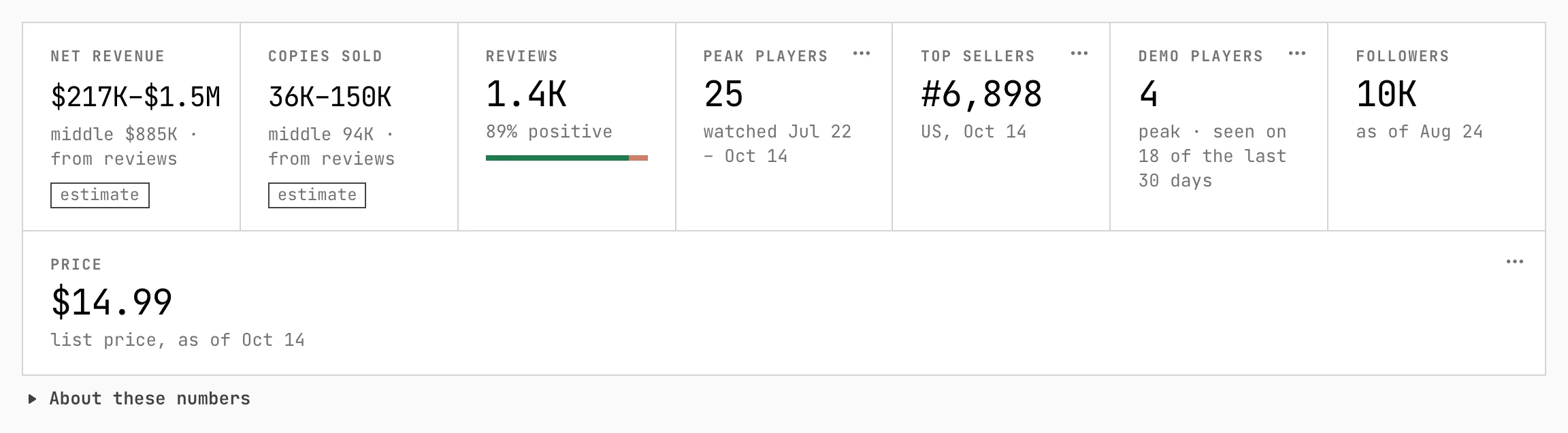
- Brief or full. The page opens with each section folded to its question and a short answer. Expand all in the contents strip opens everything, and the choice is remembered.
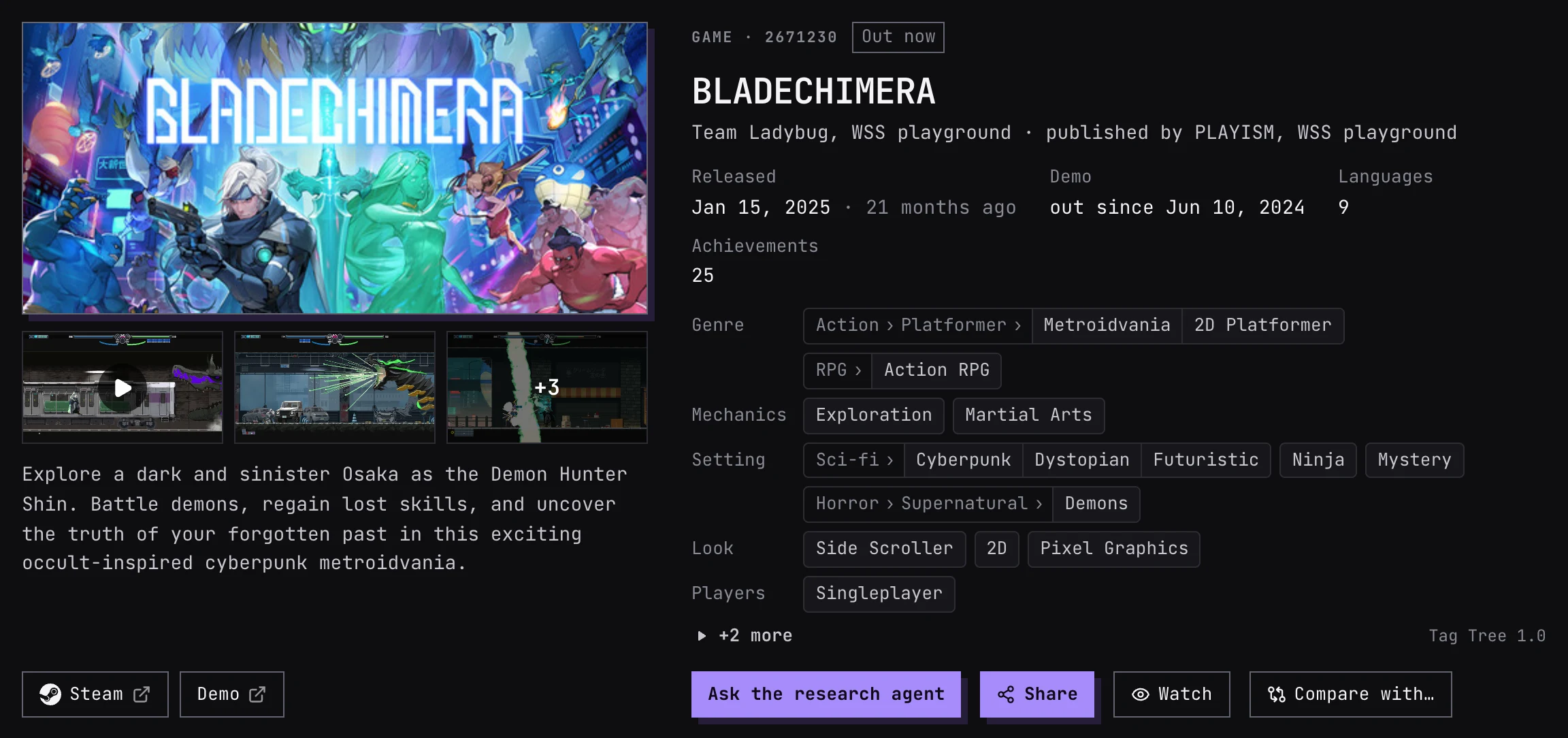
- Overview — screenshots and trailers, links to the store, the demo, the website and social pages with their audience, release and demo facts, and the Steam tags by group. The buttons beside it share the game as an image, add it to your watchlist and compare it with another game.
- Key numbers — for a released game: estimated net revenue and copies sold, reviews, peak players, its place in Steam’s US Top Sellers, demo players, followers and price. For an announced game: estimated wishlists, its Top Wishlists place, followers and demo players. Peak players are the highest daily peak we have watched, not an all-time record, and a spike that reviews did not follow is left out.
- Is that a lot? — how lifetime reviews spread across the comparable games, with this game marked, and how it started against them. For an announced game the block shows what games like it end up with and what its followers suggest for its first month.
- What might it have earned? — copies sold and the studio’s net, estimated from reviews and shown as a range; it is not sales data. Shown for paid games with at least 25 reviews.
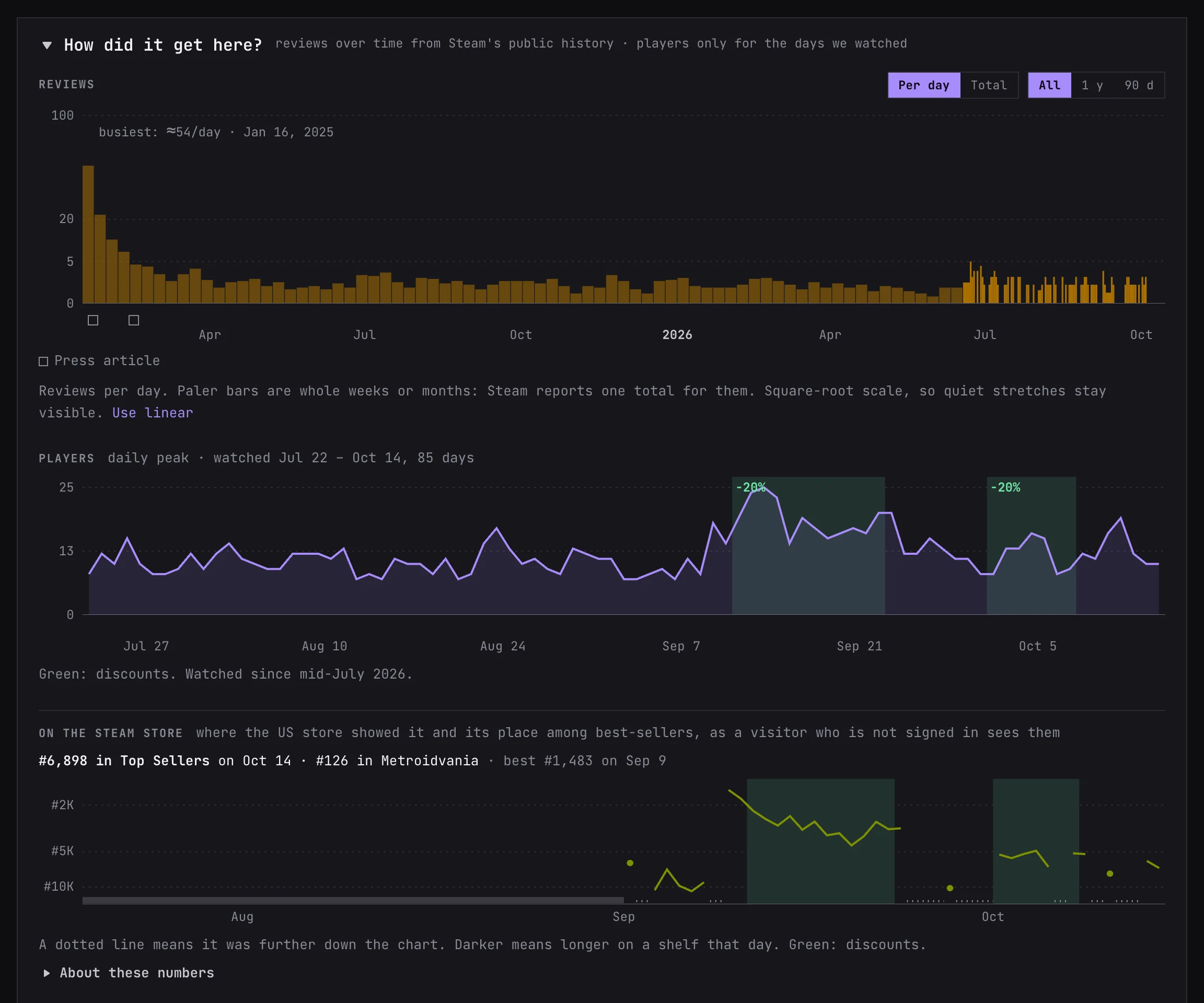
- How did it get here? — reviews, players or the wishlist rank on one timeline with the events: date announced, demo, trailers, discounts, Steam events and sales, major updates. Under it: where it appeared on the Steam store, its marketing, the curators and press that wrote about it, its community, what followed the events we can measure, and the edits to its store page.
- Do players like it? — the positive share overall and over the last 90 days, when the reviews arrived and bursts of negative reviews. What players praise and criticise is read from English reviews when you ask for it.
- How long do people play it? — the time on record when players wrote their reviews, and our estimate for a typical player.
- Where does it sell best? — its place in Steam’s Top Sellers in each country with its own chart.
- What languages do its players speak? — the languages its reviews are written in.
- Who else ships that week? — for an announced game with an exact date, the competition in its release week.
- What’s around it? — tabs: games Steam puts next to it, where Steam shows it, other games by its developer and its DLC.